
The Anatomy of Indian Festive Luxury: What Diwali Gifting Reveals About Brand Perception
Every Diwali, India's most ambitious brands reveal what luxury really means. The strongest festive programmes aren't built through decoration. They're built through decisions that shape brand perception long after the gift has been opened.
The Box That Sets the Tone
A Diwali gift is judged before it is opened. Someone lifts the box, feels its weight, looks at the way it is made, and decides within seconds whether it feels worth keeping. We have seen founders change direction at that moment because the structure said more about the brand than another layer of gold foil ever could.
That first impression is where festive luxury packaging design in India begins. Recipients respond to proportion, weight, material, and restraint before they notice decorative finishes. By the time the first sweet is tasted, they have already formed an opinion about the brand.
Every October, those decisions and opinions become visible. Diwali compresses a year's worth of brand thinking into a few weeks, revealing the difference between packaging that looks expensive and packaging that builds lasting brand perception.
Why India plays by different rules
A Diwali gift is rarely opened by one person. It lands on a dining table, someone lifts the lid, and within minutes an entire family has formed an opinion about the brand. Grandparents notice the craftsmanship. Children reach for the sweets. Someone quietly decides whether the box is worth keeping.
That changes the design brief before a single material is chosen.
Much of the conversation around luxury packaging design assumes a private experience. One customer receives the package, opens it alone, and throws it away when the product is gone. Indian festive gifting follows a different rhythm, which means every structural decision has to hold its own in a room full of people.
The box often stays long after the celebration ends. We've seen festive packaging become jewellery storage, keepsake boxes, and permanent fixtures in family homes. That second life is part of how recipients measure quality.
What's inside carries just as much meaning. Mithai isn't simply a product. It's memory, tradition, and relationships wrapped together. When the packaging feels disconnected from that experience, recipients notice immediately.
Corporate gifting adds another layer. A chairman's gift cannot feel identical to the one sent to a long-standing vendor, even if both belong to the same programme. Everyone involved understands that hierarchy, even when it never appears in the brief.
Regional context matters just as much. What feels auspicious in Gujarat may not carry the same meaning in Bengal or Tamil Nadu. Premium, in this market, doesn't come from borrowing European luxury cues. It comes from designing for the people who will actually gather around the box.
What the Season Actually Tests
By August, we've usually heard the same sentence half a dozen times.
"Can we make it feel more premium?"
The answer rarely begins with gold foil, heavier boards, or another decorative layer.
“The most mature brands don't reinvent themselves for Diwali. They reveal themselves more clearly”.
Festive pressure amplifies a brand's instincts. Some brands sharpen their identity while others keep adding, hoping more will feel luxurious. The intention is understandable. Nobody wants their gift to feel forgettable.
Recipients see it differently. They don't remember how many premium finishes a box had. They remember whether every decision felt deliberate. A package with one clear idea almost always feels more luxurious than one trying to prove its value.
Restraint only works when the design has earned it. Remove decoration from a weak concept and the weakness becomes obvious. Remove unnecessary decoration from a strong one and every remaining decision carries more weight.
The real test of festive luxury is whether every decision supports the same idea.
Three Instincts Worth Examining Together
Founders build strong instincts by running businesses, not by studying packaging. That instinct is valuable. Sometimes it simply points at the wrong lever.
The first instinct is to equate cost with luxury. A heavier board, metallic foil, or ribbon closure can elevate a package only when they support a clear design system. Recipients tend to notice intent before they notice materials.
“Recipients tend to read intent before they read materials”.
The second instinct is to lean on festive decoration. Patterns, motifs, and colour palettes borrowed from the category may feel celebratory, but they rarely make a brand memorable. The strongest festive programmes feel unmistakably like the brand itself.
The third instinct is to perfect the hero hamper while overlooking the SKU most recipients actually receive. Beautiful prototypes win internal approvals. Mid-tier gift boxes shape brand perception at scale.
One client came to us with a concept layered in decorative finishes. We stripped the design back, removing almost half the surface elements and focusing on structure instead. When the prototype arrived, the conversation changed immediately. Every remaining decision had a clear reason to exist.
Five Moments, One Experience
A gift isn't judged once. It's judged in stages.
The first judgement happens before the box is opened. Weight, balance, and proportion tell the recipient whether the gift feels considered.
Next comes touch. Before anyone notices the graphics, they're already judging the lid, the texture, and whether the opening feels effortless or awkward.
Then comes the reveal. Packaging and product should feel like they belong together. Premium mithai inside an ordinary box weakens the story. A well-designed structure strengthens it.
The final judgement happens after the celebration. In many Indian homes, the box stays while the sweets disappear. When recipients choose to keep it, the packaging continues building brand perception long after Diwali has ended.
The Festive Luxury Matrix™
Put two festive hampers on the same boardroom table with the same production budget and the difference becomes obvious almost immediately.
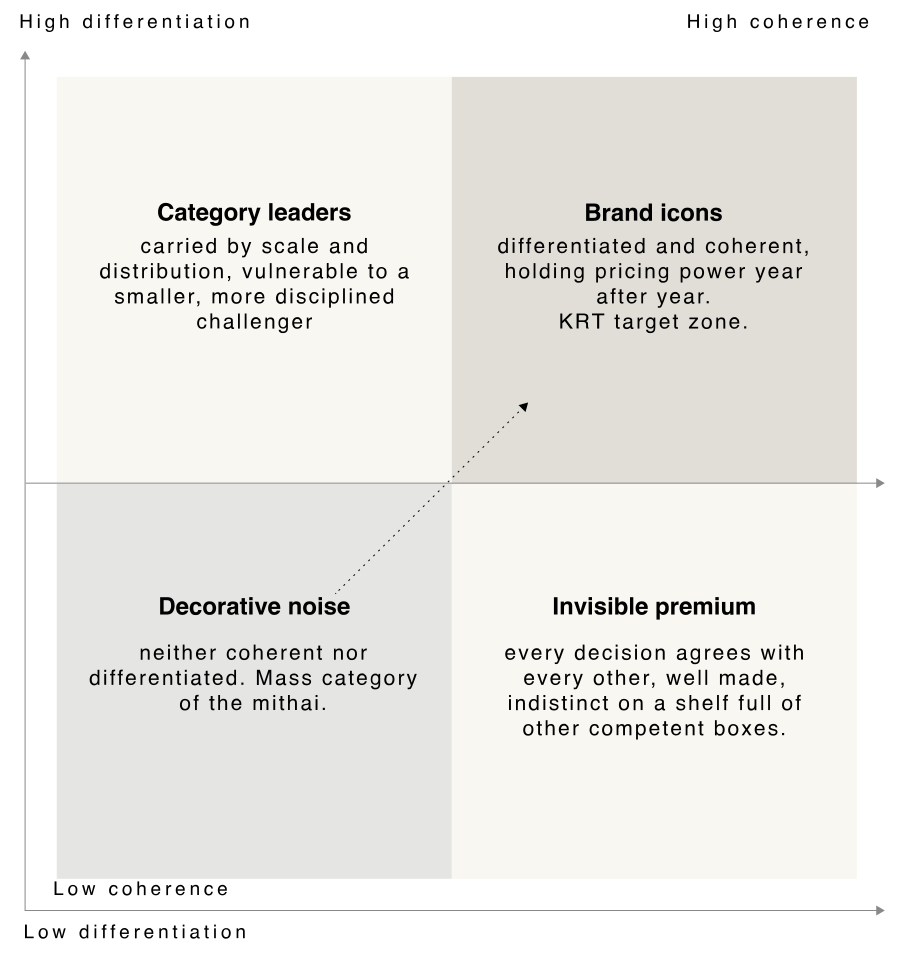
The Festive Luxury Matrix™ looks at every programme through two lenses. Everything else becomes easier to explain.
The first is System Coherence. Do the structure, materials, graphics, and finishing feel like they belong to the same idea? Luxury becomes difficult to imitate when every decision supports the next one.
The second is Differentiation. Could the packaging belong to any brand in the category, or only this one? Premium execution means very little if the recipient can't remember who sent it.
Together, these two dimensions explain why most festive programmes settle into Invisible Premium. They're well made, thoughtfully produced, and quickly forgotten.
The brands that reach Brand Icon territory begin somewhere else. They decide what they want to be remembered for before they choose materials or finishes. Once that decision is made, every design decision becomes easier because it serves the same intention.
What Corporate Buyers Are Actually Buying
They're thinking about consistency. Will every box arrive on time? Will production hold its quality across hundreds or thousands of units? Will the final delivery match the approved sample?
Those concerns shape the strongest festive programmes long before production begins. Structural systems, tooling, and production all need time to develop and test. That's why the best Diwali programmes often begin in January or February.
Brands that start early have room to make deliberate decisions. Brands that start in August usually spend the rest of the project making compromises.
The Stakeholder Problem
The person who receives a corporate gift is almost never the person who chose it.
Marketing, procurement, finance, leadership, and often a founder have already approved the programme before the box reaches someone's home. In many family businesses, another opinion quietly shapes the final decision before production begins.
The recipient is the last person in that chain, yet their impression is the only one that stays with the brand.
Designing premium Diwali gifting means satisfying every stakeholder without making the package feel like it was designed by a committee. The strongest programmes succeed because every decision follows the same idea.
The Economics Nobody Puts in the Brief
Budget conversations usually begin with finishes. We've found they become much more useful once they move to systems.
Structural decisions usually outlast a single festive season. Tooling, engineering, and well-designed systems can be refined and reused across future programmes. Decorative finishes rarely offer the same return because brands redesign and reproduce them every year.
We've seen clients discover this halfway through a project. The option that looked cheaper at the start became more expensive over three festive seasons because every cycle began from scratch.
Luxury packaging creates its greatest value when investment goes into decisions the brand can build on year after year.
Where This Category Is Quietly Moving
Five years ago, almost nobody asked whether a festive box would stay in someone's home. Today, the question comes up surprisingly often.
We're seeing brands ask better questions. They want materials that age well, structures that deserve a second life, and packaging systems that can grow with the business instead of being redesigned every October.
The brands remembered in March usually made their biggest decisions in January. They treated festive packaging as a long-term brand investment instead of a seasonal production exercise.
Those early decisions shape every prototype, production run, and recipient experience that follows.
THE KRT SIGNATURE FRAMEWORK
Five Layers of Festive Luxury™
1. Brand Intent | Why does this gift exist?
The message should be defined before anyone begins comparing materials or finishes.
2. Recipient Psychology | Who will receive it, and in what setting?
Design for the room where the box will be opened. The approval meeting comes much earlier.
3. Structural Experience | How does the package unfold?
Every interaction, from the first lift of the lid to the final reveal, should feel intentional.
4. Material Authenticity | Do the materials support the promise the brand is making?
Premium materials should reinforce the idea they represent.
5. Memory Value | Will the box still deserve a place in the recipient's home after the celebration ends?
The strongest festive packaging continues building brand perception long after the mithai is gone.
Proprietary to KRT Design Studio. Used with permission.
The KRT Journal documents patterns we've observed across real client programmes, exploring luxury branding, packaging design, and brand perception through the lens of studio practice.
If you're planning a festive gifting programme, launching a premium product, or rethinking how your brand is experienced through packaging, we'd welcome the opportunity to discuss it.


